info@ironside.com.au
+613 9068 3000
204 York Street,
South Melbourne,
Victoria, 3205


First Light at 28 Albert Road is set to deliver 47 apartments, 97 hotel rooms and a suite of world-class amenities, making it one of Ironside’s most ambitious projects.
Title
Behind the Build with Léo Terrando
Author
Nicole Callesen
Date published
28 Jan 2026
While the focus on site is firmly set on construction and delivery, the vision behind the building is equally compelling. We spoke with interior architect Léo Terrando to explore the inspiration, ideas and design thinking shaping First Light, and how his approach has helped bring this landmark project to life.
Q: You’ve recently shared that First Light stands out as your strongest project to date. What makes this project so significant for you, and was there a particular synergy between yourself and the client that helped shape the outcome?
A: First Light was special because it was a chance to create something that really feels timeless and elegant. The client was open to ideas and trusted my vision, which doesn’t always happen, so we were able to collaborate in a really fluid way. That synergy made it possible to focus on the small details and subtle moments that make the project feel cohesive and unique.
Q: You’ve recently shared that First Light stands out as your strongest project to date. What makes this project so significant for you, and was there a particular synergy between yourself and the client that helped shape the outcome?
A: First Light was special because it was a chance to create something that really feels timeless and elegant. The client was open to ideas and trusted my vision, which doesn’t always happen, so we were able to collaborate in a really fluid way. That synergy made it possible to focus on the small details and subtle moments that make the project feel cohesive and unique.
Q: As an international designer, how have your global influences shaped your design sensibility, and how did you translate that perspective to suit the Australian context for this project?
A: I’ve always been inspired by European design — the fluidity of French interiors, the calm minimalism of Italian work, things like that. For First Light, I wanted to bring that influence without it feeling out of place here. So I focused on clean, flowing spaces, natural light, and materials that feel both refined and approachable — something that works in Melbourne’s climate and lifestyle but still carries that international sensibility.
Q: You’ve said that “interiors aren’t meant to be polite — they’re meant to make you feel something.” What emotions or experiences did you want to evoke when someone enters a residence at First Light?
A: I wanted people to feel calm, relaxed, and somehow elevated when they walk in. The spaces are designed to be welcoming and luxurious without being stuffy. It’s about creating a subtle wow factor — a feeling of ease and sophistication that makes people feel at home but also inspired.
Q: How did you approach the relationship between the interiors and the architectural form of the building to ensure cohesion from outside in?
A: I treated the interiors and architecture as one story. The materials, the flow of spaces, the light — everything was considered from the outside in. Travertine, timber, and subtle metal accents tie the inside to the exterior, while thoughtful design moments give people small surprises as they move through the space.
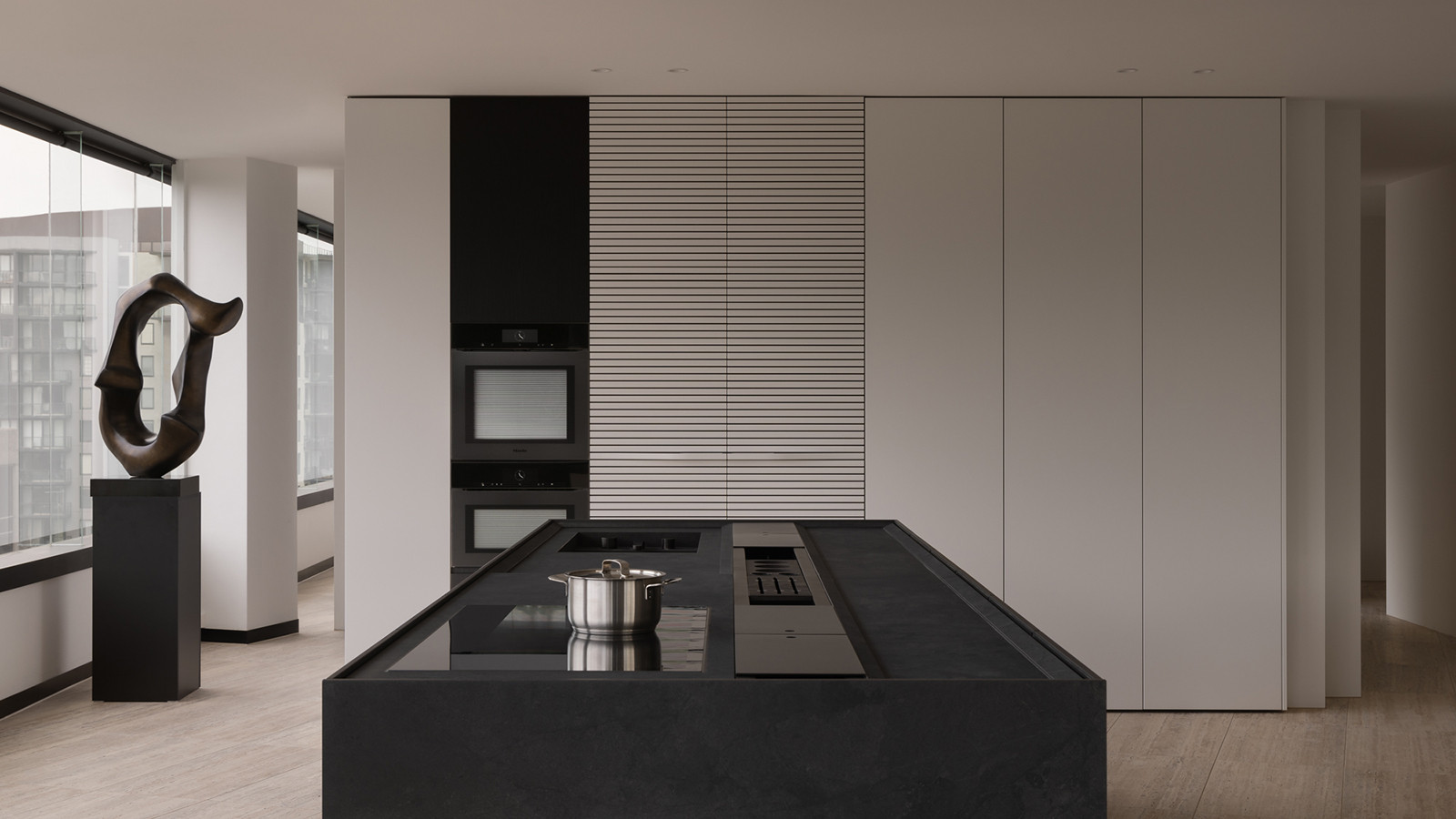
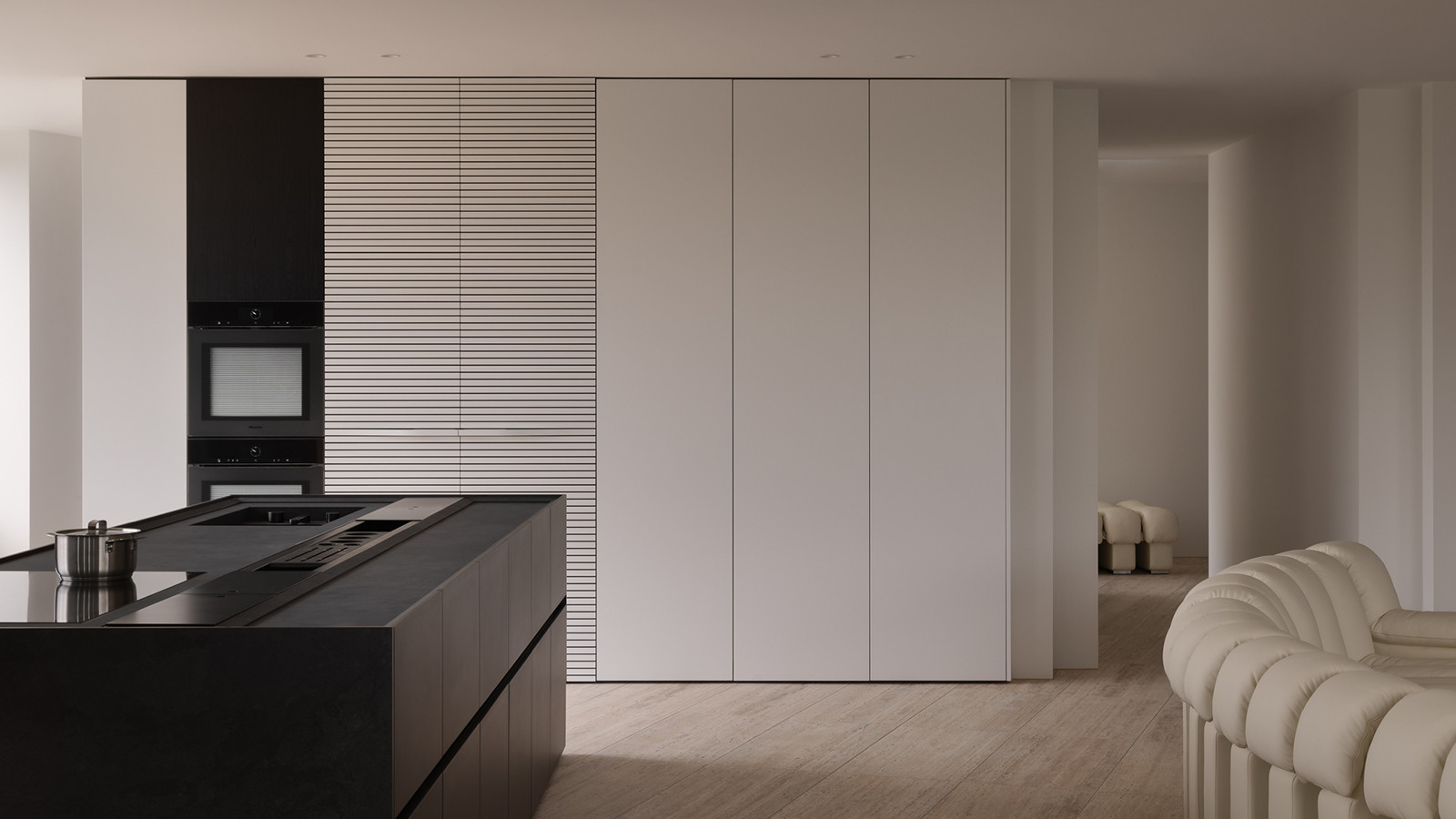
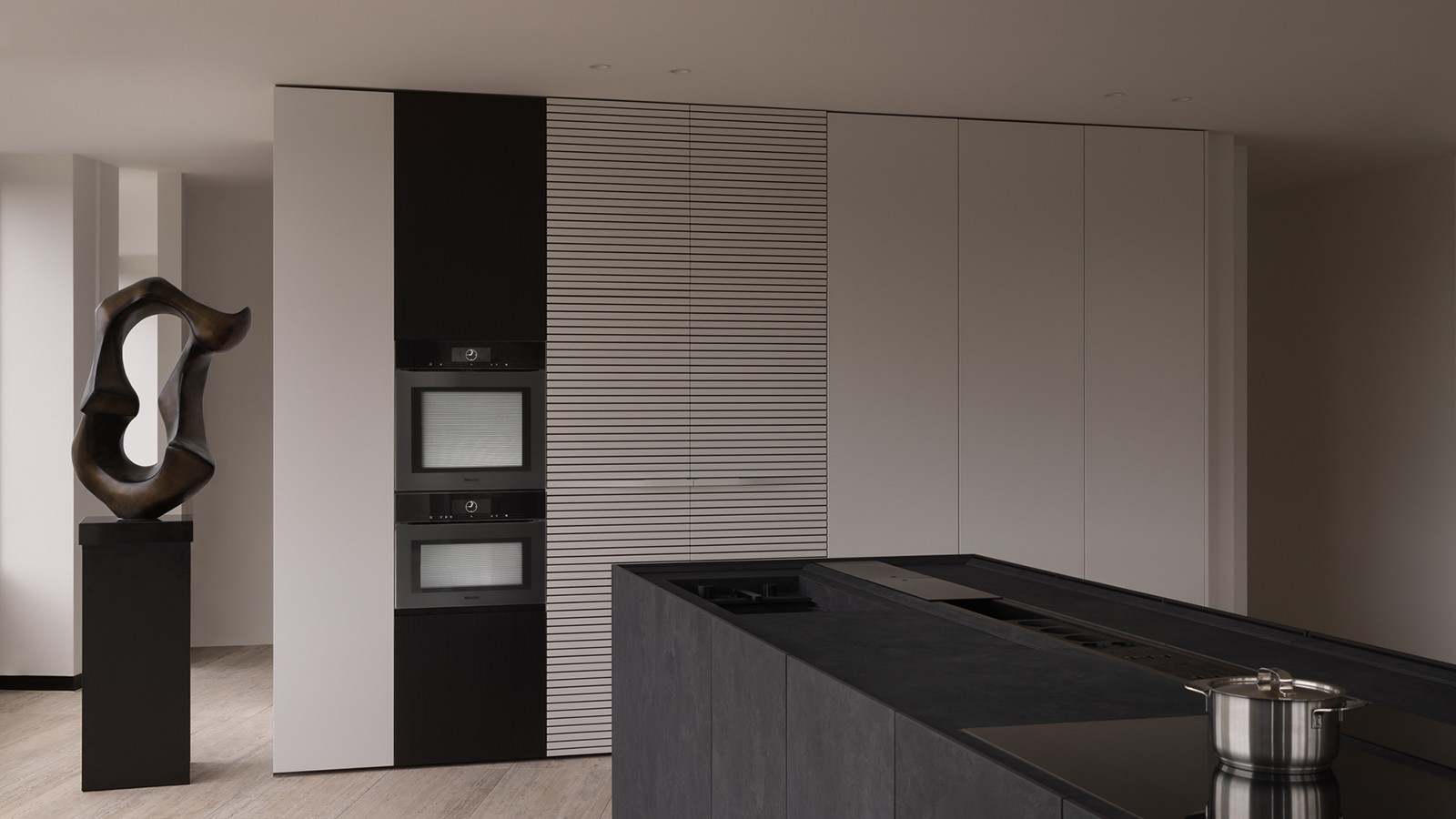
Q: The brief called for something timeless and internationally significant in Melbourne – how did you achieve this? What specific elements are you most proud of in this project?
A: Timelessness comes from restraint and attention to detail. For First Light, it was about the right proportions, the textures, and the material choices that won’t date. I’m proud of how the details come together — the flowing stone, the joinery, the spaces that feel generous yet intimate. It’s subtle, but that’s what makes it feel enduring.
Q: Your work is known for its subtle, almost narrative-driven details – for example, the penthouse fireplace that appears to ‘unzip’ and reveal the hearth. What is your inspiration behind these details and what role do they play in the overall experience?
A: I like little surprises that make a space feel alive. My inspiration comes from art, cinema, and the materials themselves — the way they move, feel, and interact with light. These moments give people a connection to the space beyond just using it — they invite curiosity and engagement.
Q: Are there other details that play a role in the First Light experience?
A: Definitely. From the curved walls to the way stone flows through spaces, to the way functional elements are subtly integrated, there’s a lot of thought in how everything comes together. The idea is that the space feels harmonious, layered, and rewarding — you notice new things each time you move through it.